

Main image: AI illustration.
You can start a business in one day — from idea to first sale between sunrise and bedtime.
Business applications reached a record in 2025: 5,696,742 filings (Census Bureau, 2025).
See the full numbers in our statistics article: Small Business Statistics 2026: Starts, Survival, and the Cost of Staying Open.
Most of those applications never become employers.
Only about 6 in 100 December 2025 applications were projected to become employer businesses within a year (Census Bureau, 2026).
This article is general information, not legal or financial advice.
For decisions about your money or your business, consult a qualified professional.
Summary
- Launching takes a single day, but only for a narrow shape: a service you can deliver yourself, sold to people you can reach today.
- Start as a sole proprietor, get a free EIN in minutes, and open a separate bank account before the first sale.
- Validation comes before spending: five conversations and one pre-sale beat a logo, a business plan, and a loan application.
- State approval can take days or weeks, so launch the selling part today and formalize the rest next (U.S. Chamber of Commerce, 2026).
What One Day Can Actually Build
Overnight means one working day, not one magic trick.
Count on eight focused hours and a phone that already works.
| Done today | Takes longer |
|---|---|
| Idea, buyer list, validation calls | State LLC or corporation approval |
| EIN, bank account application | Some licenses and permits |
| One-page site, offer, payment link | A loan approval |
| First outreach, first sale | Hiring employees |
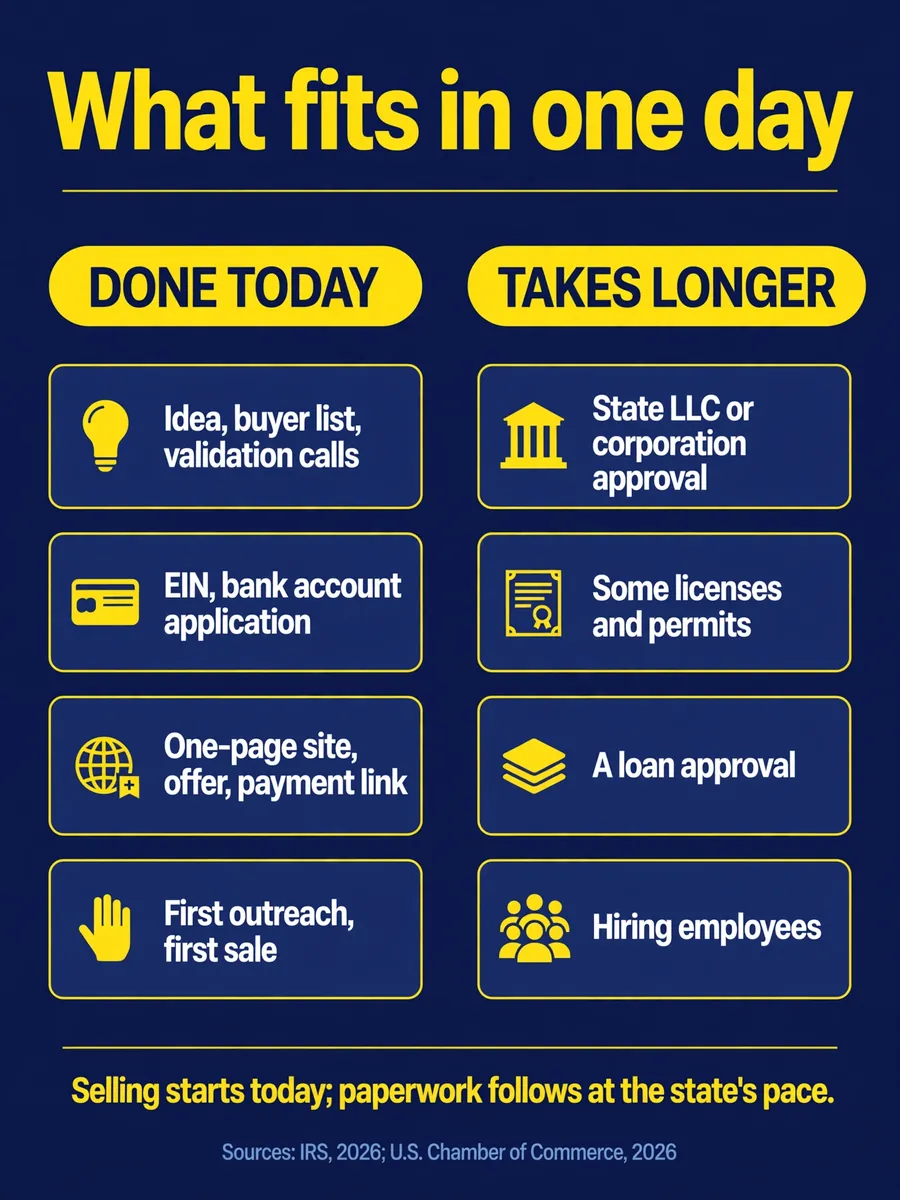
Treat the boundary as the plan’s spine.
Everything after this section fits inside it.
Pick an Idea You Can Sell Tonight
A one-day idea passes three tests before noon.
Deliver it yourself, find a named buyer who wants it this week, and reach that buyer today.
Skills you already sell to friends count double.
Your neighbor who pays you to fix a fence is a buyer, not a favor.
Ideas that need inventory, a license, or a team fail the test.
They belong to a longer launch, not to tonight.
Write the offer in one sentence before lunch.
Needing a paragraph to explain the sentence means the idea is not ready.
Service sellers with a skill and a network fit this narrow start.
It does not suit inventors, importers, or anyone who needs a license before the first sale.
Validate It Before You Spend Anything
Validation means a stranger agrees to pay, not a friend saying the idea sounds nice.
Five short conversations beat five hours of logo design.
Ask each person three things: the problem, what they pay now, and what would make them switch.
Write the answers down before you change the offer.
Nothing signals demand like a pre-sale.
One paid deposit ends the debate about whether the idea works.
Our evening validation guide walks through the same test step by step: Validate Your Business Idea in One Evening, Before You Spend Anything.
Choose the Simplest Legal Shape
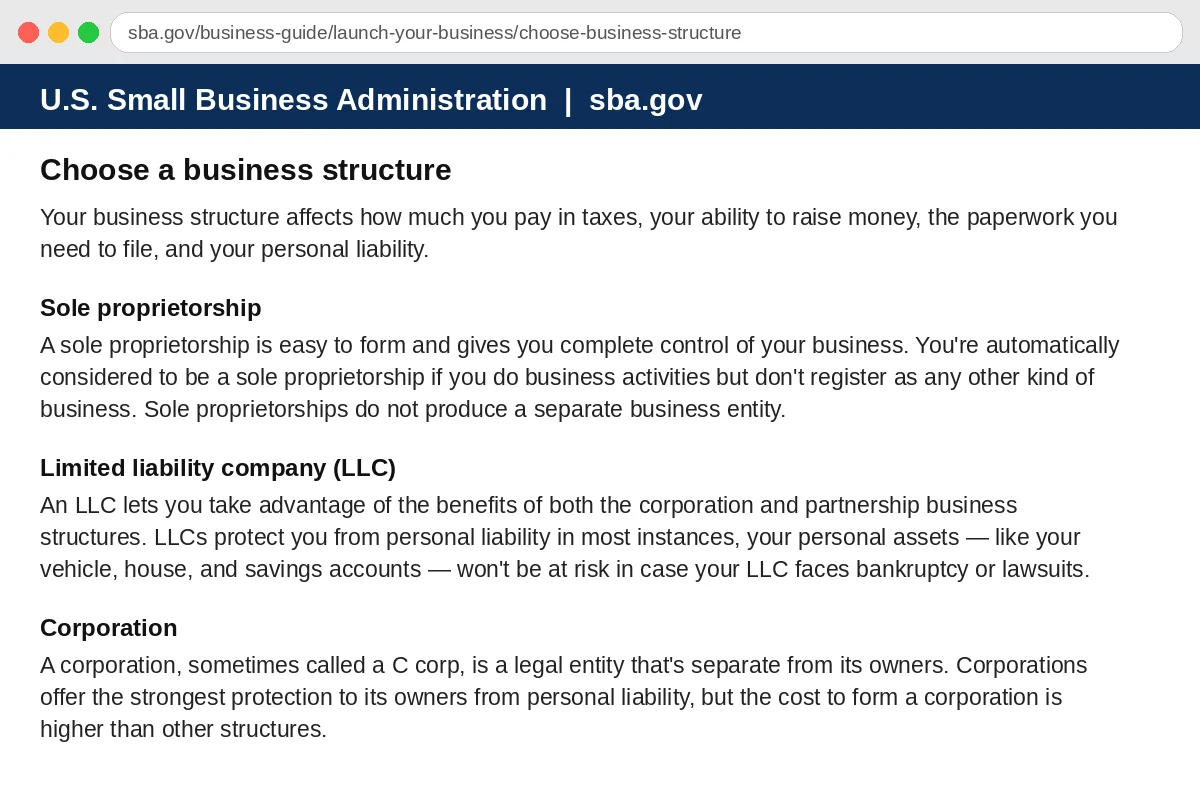
Five common structures sit on the SBA’s list, and the choice changes your liability, your taxes, and your paperwork (SBA, 2026).
For a one-day launch, only two matter.
| Structure | What it means | One-day fit |
|---|---|---|
| Sole proprietorship | You are the business; no separate entity; personal liability | Yes — automatic, no filing |
| LLC | Separate entity; personal assets protected in most cases | Later — state filing first |
| Corporation | Strongest protection; higher cost; more records | Later — not a day-one job |
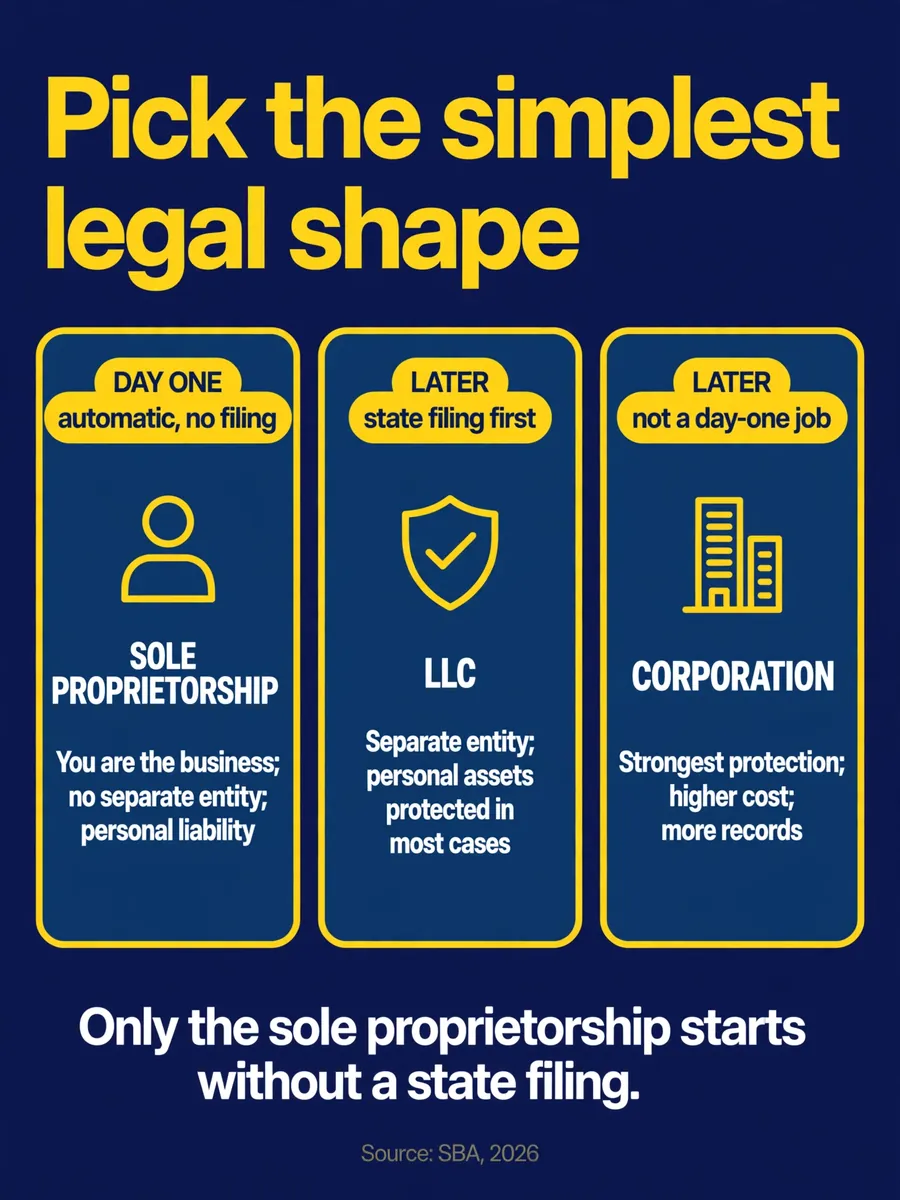
Sole proprietorship starts the moment you do business.
According to the SBA (2026), you are automatically one if you trade without registering another form.
That speed has a price: no separation between your money and the business money.
Debts of the business are your debts.
An LLC protects your personal assets in most cases, and profits pass through to your personal income (SBA, 2026).
Forming one means filing with your state first, then waiting for approval.
Strongest protection and heaviest paperwork come with a corporation.
Its formation cost runs higher than other structures (SBA, 2026).
Pick the sole proprietorship for day one if your risk is low and your assets are modest.
Move to an LLC once money flows and the state filing is done.
Get Your Tax ID and Bank Account
An EIN is a federal tax ID for your business.
Minutes and no fee: that is how fast the IRS issues it online once the application is approved (IRS, 2026).
Never pay a website for one.
Never pay a fee for an EIN, the IRS states plainly (IRS, 2026).
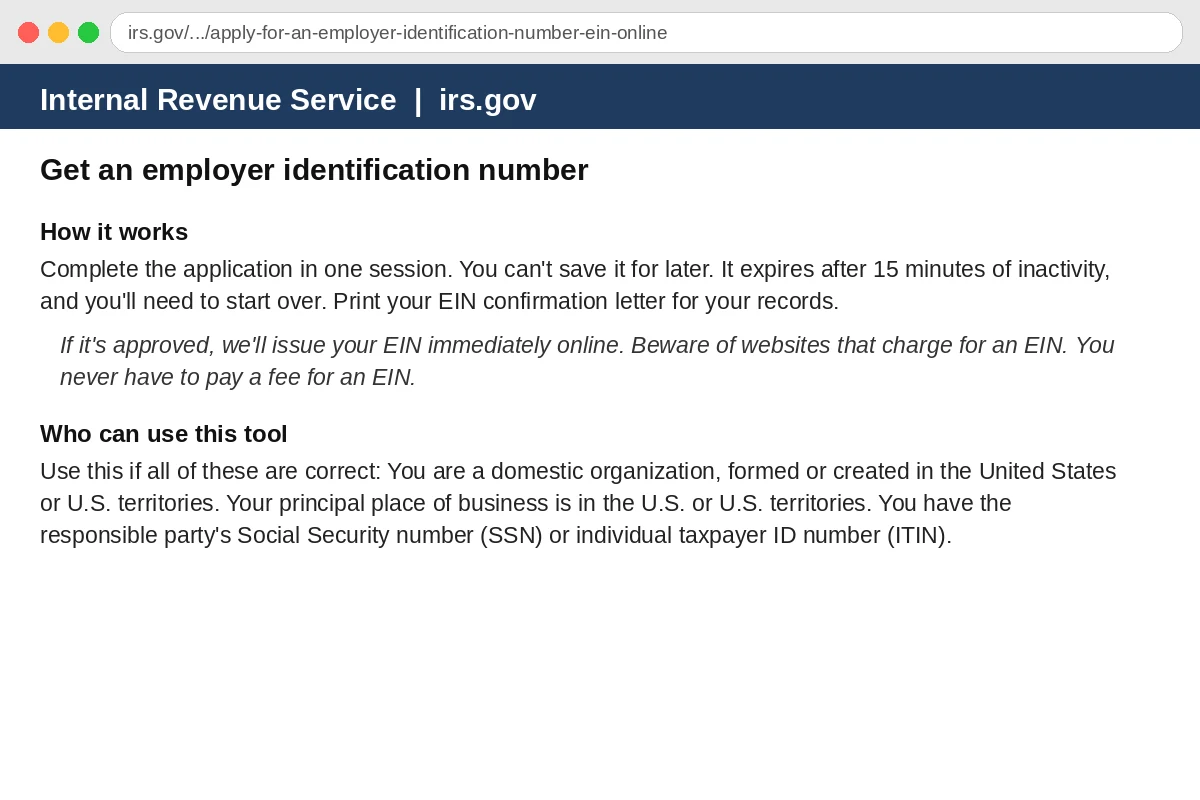
Apply in one sitting, because the online form expires after 15 minutes of inactivity (IRS, 2026).
You need the responsible person’s Social Security number or ITIN to apply.
Form an LLC or corporation with your state before you apply for its EIN.
Applying first may delay the application, the IRS warns (IRS, 2026).
Hiring employees, running a partnership or corporation, and opening many business bank accounts all need an EIN (IRS, 2026).
With no employees, a sole proprietor can often start without one.
Open a separate business bank account before the first sale lands.
Open one as soon as you start accepting or spending money, the SBA advises (SBA, 2026).
Bring your EIN and formation papers to the bank.
At the bank, a sole proprietor brings the EIN and a trade name registration where the state requires one.
Licenses depend on what you sell and where you sell it.
Check your city and state rules before the first sale, not after.
Price It So the First Sale Pays
Price from costs and margin, not from hope.
Our pricing guide shows the same math with worked examples: Pricing Your First Product: Simple Math Instead of Guesswork.
Take a simple example with round numbers.
Two hours of garden cleanup at $60 an hour brings $120.
Two cleanups a week bring $960 a month before costs.
That arithmetic, not a feeling, sets the price.
Charge enough that one bad week still leaves money for the next.
A price that only works on perfect weeks is not a price.
Services priced by the hour or the job fit this math.
Products with uncounted inventory costs do not fit this math.
Launch Day, Hour by Hour
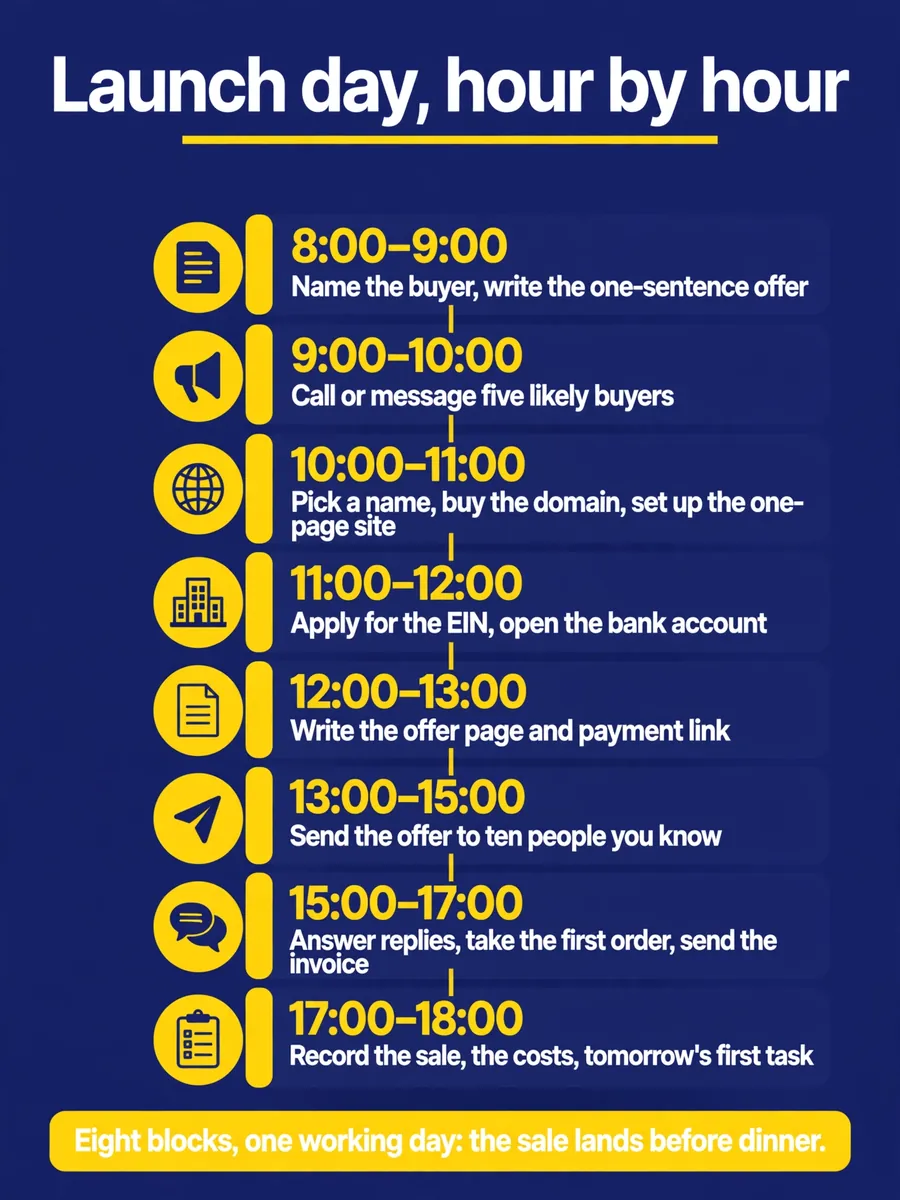
Eight hours, eight blocks, one sale at the end.
Start at 8:00 and protect each block from anything that is not selling.
| Time | Do this | Done when |
|---|---|---|
| 8:00–9:00 | Name the buyer and write the one-sentence offer | Offer fits one sentence |
| 9:00–10:00 | Call or message five likely buyers | Five answers written down |
| 10:00–11:00 | Pick a name, buy the domain, set up the one-page site | Site live with offer and contact |
| 11:00–12:00 | Apply for the EIN and open the bank account | EIN in hand; account applied for |
| 12:00–13:00 | Lunch, then write the offer page and payment link | Buyer can pay from the page |
| 13:00–15:00 | Send the offer to ten people you already know | Ten messages sent |
| 15:00–17:00 | Answer replies, take the first order, send the invoice | First payment received or booked |
| 17:00–18:00 | Record the sale, the costs, and tomorrow’s first task | Books started; tomorrow planned |
Skip a block only to save the sale, never to polish the logo.
Ship the finished offer before the perfect website.
How Do You Get the First Sale?
Ask for the sale in plain words.
“I can do this for you on Thursday for $120 — shall I book it?” beats a clever slogan.
Send the payment link in the same message as the offer.
Every extra step between yes and payment loses buyers.
Where to find buyers without ads: Your First Ten Customers: Where to Find Them Without Ads.
Follow up once the next morning if nobody replies.
One polite nudge closes more sales than a second ad.
The First Week After Launch
Launch day proves someone pays.
Week one proves the business repeats.
Days one and two belong to buyers.
Answer every reply fast, deliver on time, and ask each buyer for a short testimonial.
Spend days three and four on friction.
Fix whatever slowed the first sale: the price, the page, or the payment link.
Days five to seven belong to numbers.
Add up sales, costs, and hours, then decide the one change for week two.
End the week with a simple test: would you pay yourself for this week?
No means change the offer before spending more.
Solo sellers with a few buyers fit this routine.
Shops needing staff, stock, or a signed lease do not fit this routine.
What It Costs, Honestly
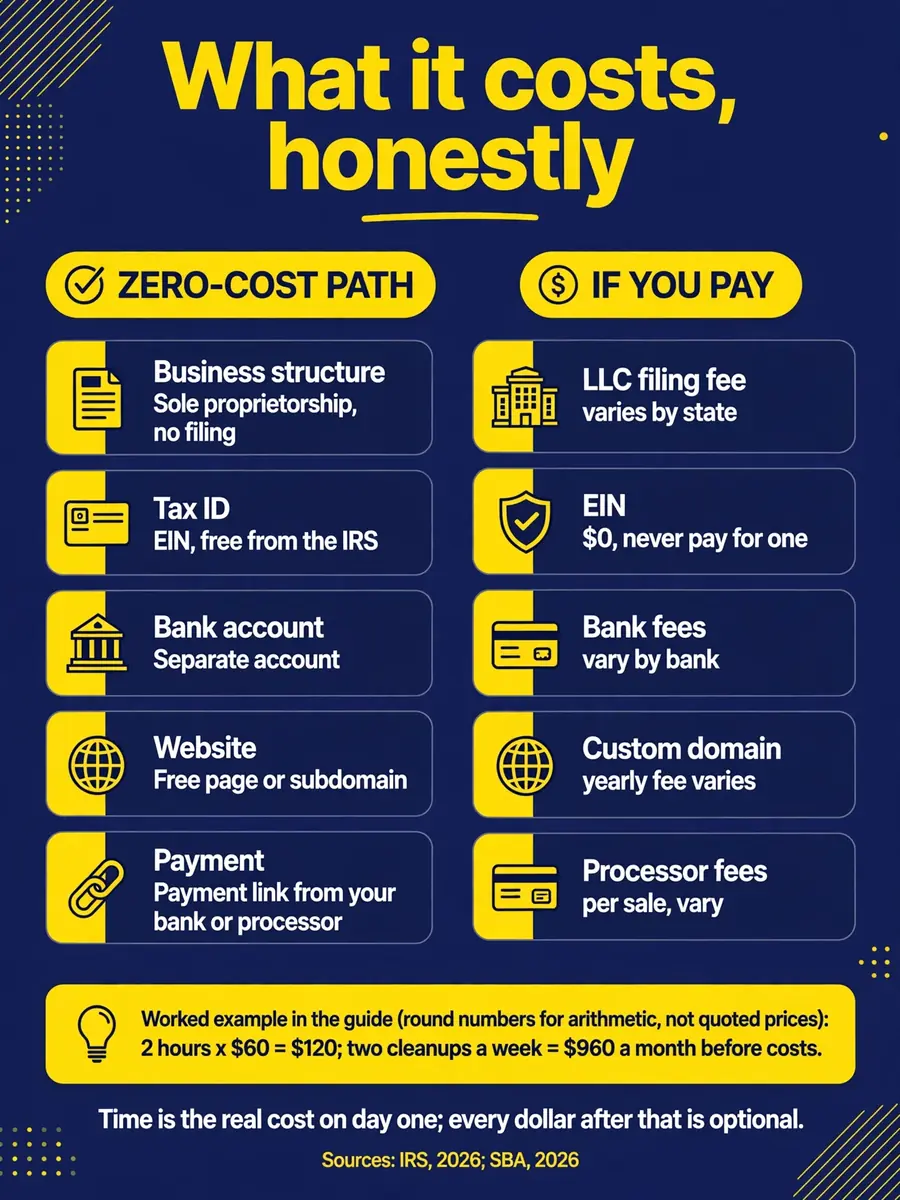
Day one can cost nothing but time.
Below, the zero-cost path sits beside the optional costs.
| Item | Zero-cost path | If you pay |
|---|---|---|
| Business structure | Sole proprietorship — no filing | LLC filing fee (varies by state) |
| Tax ID | EIN — free from the IRS | $0 — never pay for an EIN |
| Bank account | Separate account | Fees vary by bank |
| Website | Free page or subdomain | Custom domain, yearly fee varies |
| Payment | Payment link from your bank or processor | Processor fees per sale vary |
Borrowing to launch is a weak start.
Applicants usually got less than they asked for: 42% received the full amount (Federal Reserve, 2026).
Owners paid the shortfall from their own pockets in most cases: more than half of firms with financial challenges did (Federal Reserve, 2026).
Plan a version you can fund yourself, then borrow only to grow.
Rising costs hit 73% of small employer firms as a financial challenge (Federal Reserve, 2026).
Costs press from day one: Rising Costs Hit Three in Four Small US Firms, Fed Survey Finds.
Seven Mistakes That Waste the First Day
- Building before validating: a website, a logo, and inventory before one buyer says yes. Sell the offer first, in plain words.
- Pricing from hope: a low price that leaves no margin for a bad week. Use the cost-plus math in the pricing guide.
- Mixing money: business cash in a personal account, so no one knows what the business earned. Open a separate account on day one.
- Hiding the offer: a beautiful site that never says what it costs or how to buy. Put a price and a payment link on the page.
- Waiting for perfect: one more course, one more tool, one more week. Set a deadline — the sale happens today or the idea waits.
- Borrowing to start: a loan before the first sale, when only 42% of applicants get the full amount (Federal Reserve, 2026). Fund the launch yourself.
- Skipping the record: sales and costs in your head, so the week’s numbers never exist. Keep one notebook page per day.
Every mistake above looks like progress on the day.
Each one is fixed by the same move: sell first, polish later.
What the Numbers Say About Your Odds
The odds are better than the slogans say.
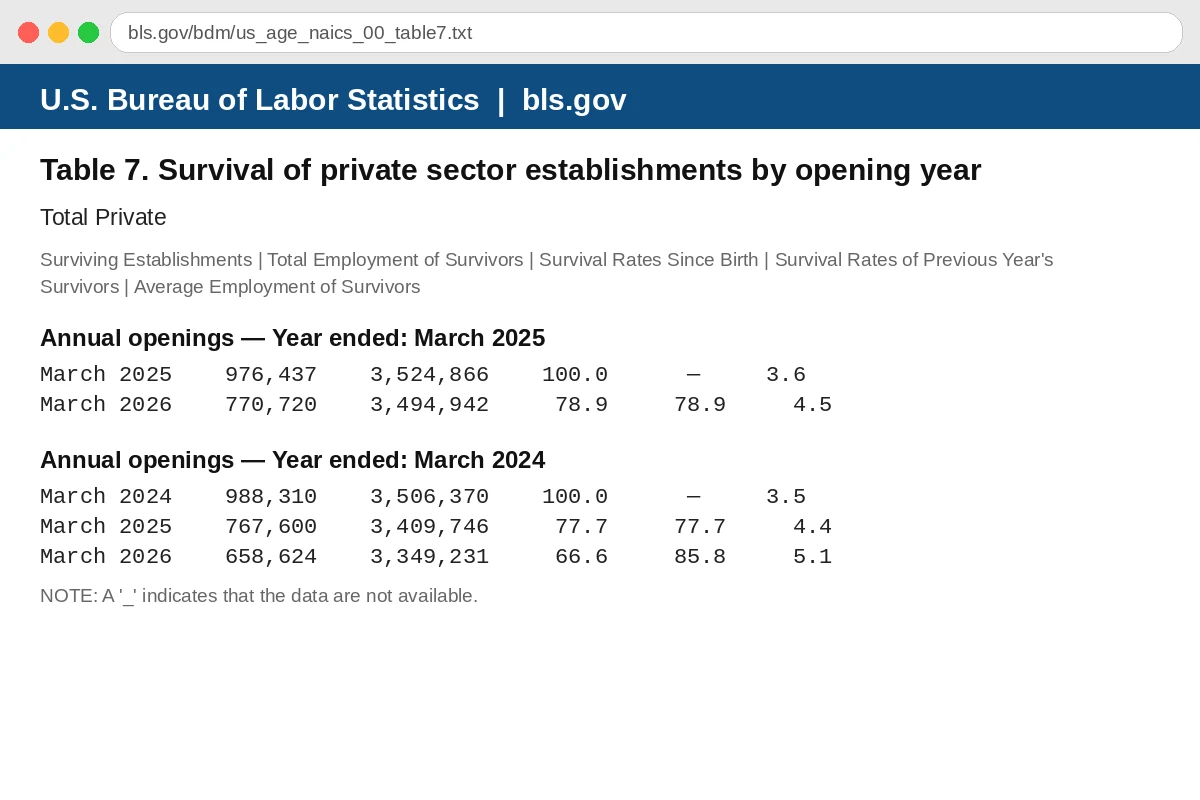
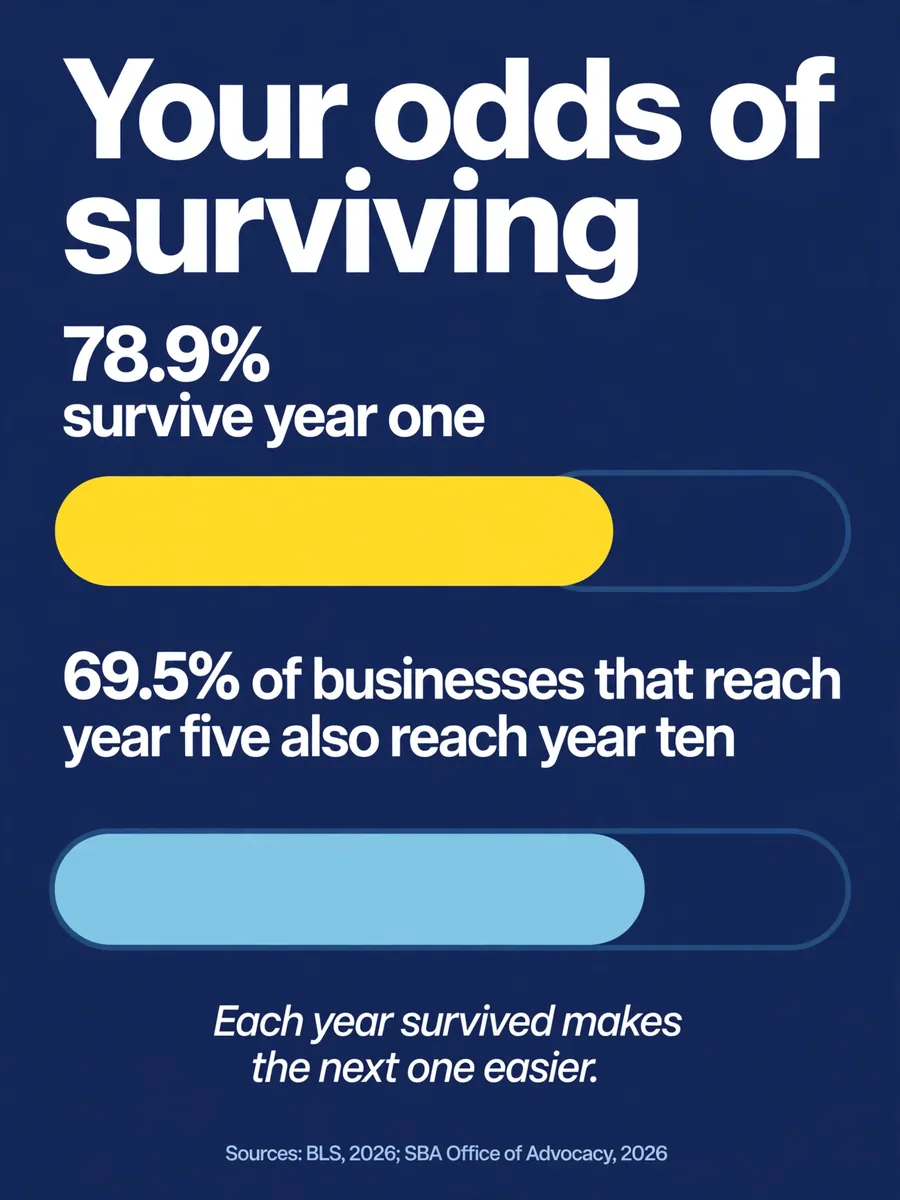
Four in five new employer establishments survive their first year (BLS, 2026).
Find the full survival curve in our statistics article: Small Business Statistics 2026: Starts, Survival, and the Cost of Staying Open.
Most founders start alone.
Four in five small businesses have no employees at all (SBA Office of Advocacy, 2026).
Applications are not businesses.
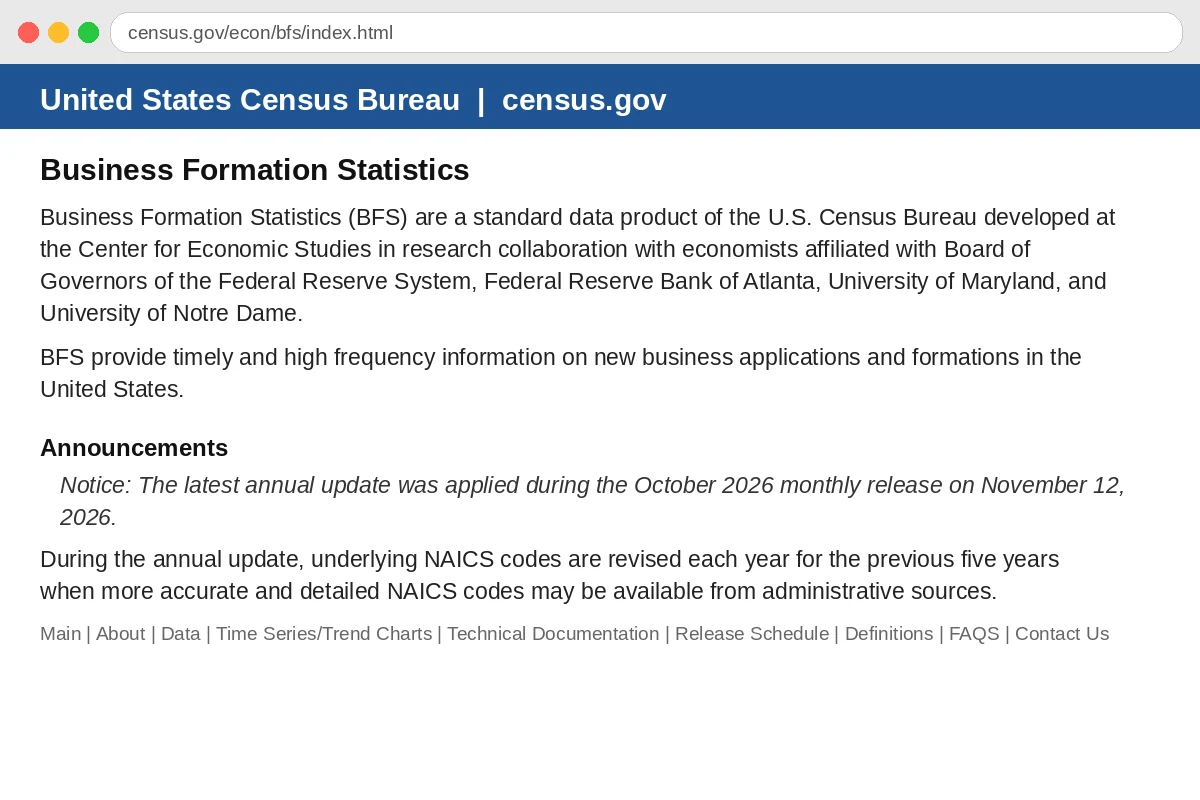
About 6 in 100 December 2025 applications were projected to become employer firms within a year (Census Bureau, 2026).
Small employer firms mostly closed 2024 without a profit: 47% were in the black (Federal Reserve, 2026).
Plan for months of thin income, not a payday on day one.
Each year survived makes the next one easier.
Businesses that make it to year five usually make it to year ten: 69.5% do (SBA Office of Advocacy, 2026).
Same story, plainer words, in the survival news: Four in Five New US Businesses Survive Their First Year.
Is a One-Day Launch Right for You?
Built for one founder: a skill, a phone, and ten people to call.
It does not fit a factory, a shop, or a licensed trade.
Begin as a sole proprietor, sell first, and formalize later.
Sell first, formalize later: that order is the whole plan, and the rest of this guide is the detail.
If you need a salary from month one, do not quit your job for this launch.
Build it beside the job until the sales pay a month’s bills.
If you have savings and a skill buyers already pay for, today is the cheapest day to start.
Tomorrow costs the same and buys nothing extra.
Methodology
Figures in this guide come from four federal sources, read on 25 November 2026.
First pair: the SBA fact sheet of February 2026 and Census Business Formation Statistics.
The other two are BLS Table 7 and the Federal Reserve 2026 Report on Employer Firms.
Legal steps follow the SBA’s ten-step guide and the IRS EIN pages, both read the same day.
Rules vary by state, so the guide names the official source instead of quoting one state’s fee or deadline.
No measurement stands behind the launch-day schedule or the worked pricing example: both are the author’s plan.
Round numbers in the example are chosen for arithmetic, not quoted from any source.
This guide covers a United States launch.
Readers elsewhere should follow the same sequence and check their own country’s official registration and tax pages.
What this guide does not cover: hiring, inventory, and licensed trades.
Those need a longer plan and, often, professional advice.
Frequently Asked Questions
Can I really start a business in one day?
Yes, if the shape fits: a service you deliver yourself, sold to people you can reach today.
State approval for an LLC or corporation takes longer, so day one runs as a sole proprietorship.
Do I need an LLC before my first sale?
Sole proprietors need no state filing, and you can form an LLC later once money flows.
Form an LLC before the risk or the assets grow, because it protects personal assets.
How much money do I need to start?
Zero dollars but time: the EIN is free and a sole proprietorship needs no filing.
Optional costs — a domain, a state filing, tools — vary, so check the price before you commit.
What if nobody buys on launch day?
Treat silence as data, not failure.
Find out what stopped the five people, change one thing in the offer, and ask again the next day.
When should I quit my job for the business?
When the business pays a month’s bills more than once, not after one good day.
Keep the job until the sales repeat, then decide with numbers in hand.
References
- 10 steps to start your business, U.S. Small Business Administration
- Choose a business structure, U.S. Small Business Administration
- Open a business bank account, U.S. Small Business Administration
- Get an employer identification number, Internal Revenue Service
- Advocacy Releases Frequently Asked Questions About Small Businesses 2026, SBA Office of Advocacy
- Business Formation Statistics, U.S. Census Bureau
- Establishment Age and Survival Data, U.S. Bureau of Labor Statistics
- 2026 Report on Employer Firms, Federal Reserve Banks
- How to Start a Business in a Few Hours, U.S. Chamber of Commerce