

Main image: AI illustration.
The cursor has been blinking in the price box for twenty minutes.
Everything else is done: the product works, the page is live, and only a number stands between you and a first sale.
Most first-time founders guess at this point. They pick a number that feels safe, then spend weeks wondering whether it was too high or too low.
Guessing is the problem this guide removes. You will price from three things you can actually measure: what the product costs you, what your time is worth, and what buyers already pay.
No formulas from a textbook appear below. Only addition, one short worked example, and a way to test the number once it is live.
By the end, you will have one number on the page and a plan to test it. The rest is watching what buyers do next.
Why the Price Feels Harder Than the Product

Building the product felt like real work. Pricing feels like a judgment, and judgments invite second-guessing.
A price that looks too high can scare away the very people you want to help. Too low, and the product can look careless before anyone tries it.
Behind both fears sits the same question: what is this worth? Worth is not a property of the product alone, so the question has no single right answer.
Treat the price as a starting point, not a verdict. A first price can move, and moving it after real sales tells you more than weeks of thinking ever will.
Start With What the Product Costs You

Before any price can make sense, the costs underneath it have to be visible. Write them down in one place, even if the list looks short.
Materials come first. For a physical product, that means everything that goes into one unit: ingredients, packaging, and postage if you pay it.
For a service or a digital product, the list looks different. Software subscriptions, payment fees, and the cost of delivering the work still count, even when nothing ships in a box.
Payment fees deserve their own line. Every sale loses a small percentage to fees, so include it now rather than discovering it later.
Add the numbers together. That total is the floor: below it, every sale loses money, no matter how good the product is.
Count Your Time Like a Real Cost

Beginners often leave their own time out of the price. Then the product pays for its materials and nothing else, which is a slow way to burn out.
Pick an hourly number for your time. Choose a number you would accept for an evening of work; it need not match a salary you once had.
Multiply that number by the hours one unit takes. Making, packing, answering questions, and fixing problems all count, because buyers experience all of it.
Price a one-hour consultation at its materials cost alone and you are really giving it away. Your time is the product in that case, so it belongs in the price.
Stay generous with the hours rather than optimistic. Rushing through the estimate only creates a price that punishes you later.
Look at What Buyers Already Pay
Costs tell you the lowest price you can accept. Buyers tell you the highest price the market already accepts, and that information is free to find.
Search for products that solve the same problem for the same kind of buyer. Note the prices, then note what each one includes, because a bare product and a supported one are not the same offer.
Three or four comparisons are enough. Skip the long spreadsheet of competitors: the pattern in a handful of prices already shows the range.
Your price can sit inside that range without copying anyone. Sitting far above it needs a reason buyers can see, and sitting far below it needs a reason too.
Watch what each competitor includes at each price. People often pay more for faster delivery, personal support, or a guarantee, and compare those extras before they compare numbers.
Talk to the people you validated the idea with. Ask what they paid last time for something similar, and listen for the number they say without hesitating.
A Worked Example You Can Copy
Numbers become clearer with one concrete example. Imagine a handmade soap bar sold online, with costs you can check against your own product.
| Cost item | Amount (illustrative) |
|---|---|
| Materials for one bar | $3 |
| Packaging | $1 |
| Postage | $2 |
| Payment fee | $1 |
| Time: half an hour at $20 an hour | $10 |
| Total cost per bar | $17 |
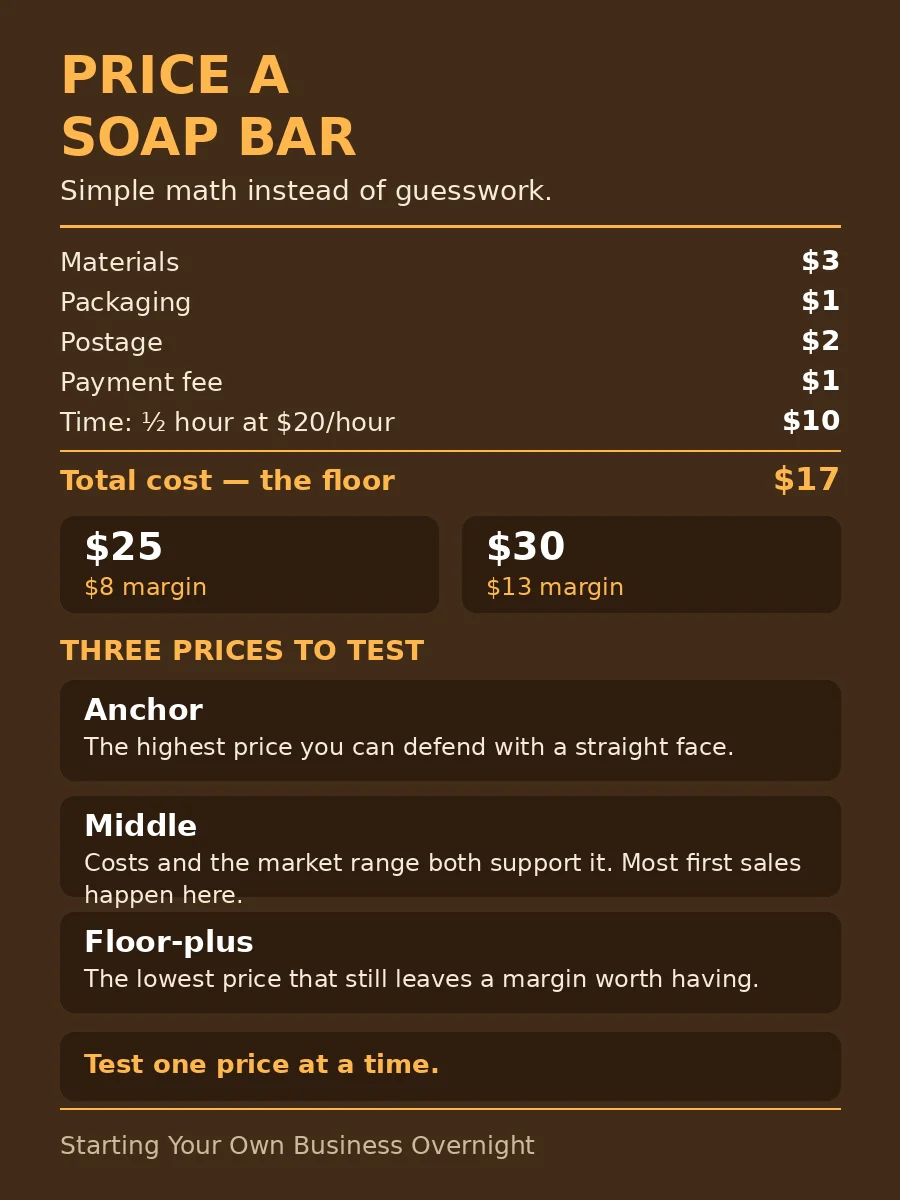
Seventeen dollars is the floor, not the price. Selling at seventeen would pay the costs and leave nothing for the work of growing the business.
Twenty-five dollars leaves eight dollars above the floor. That margin pays for the next batch, the occasional refund, and the time spent answering buyers.
Raising the price to thirty dollars in this example adds five more dollars of margin. Whether buyers accept it is something only a real test can show.
Run the same arithmetic on your own product. Replace each line with your real numbers, and the floor appears without any guessing.
Three Prices Worth Testing
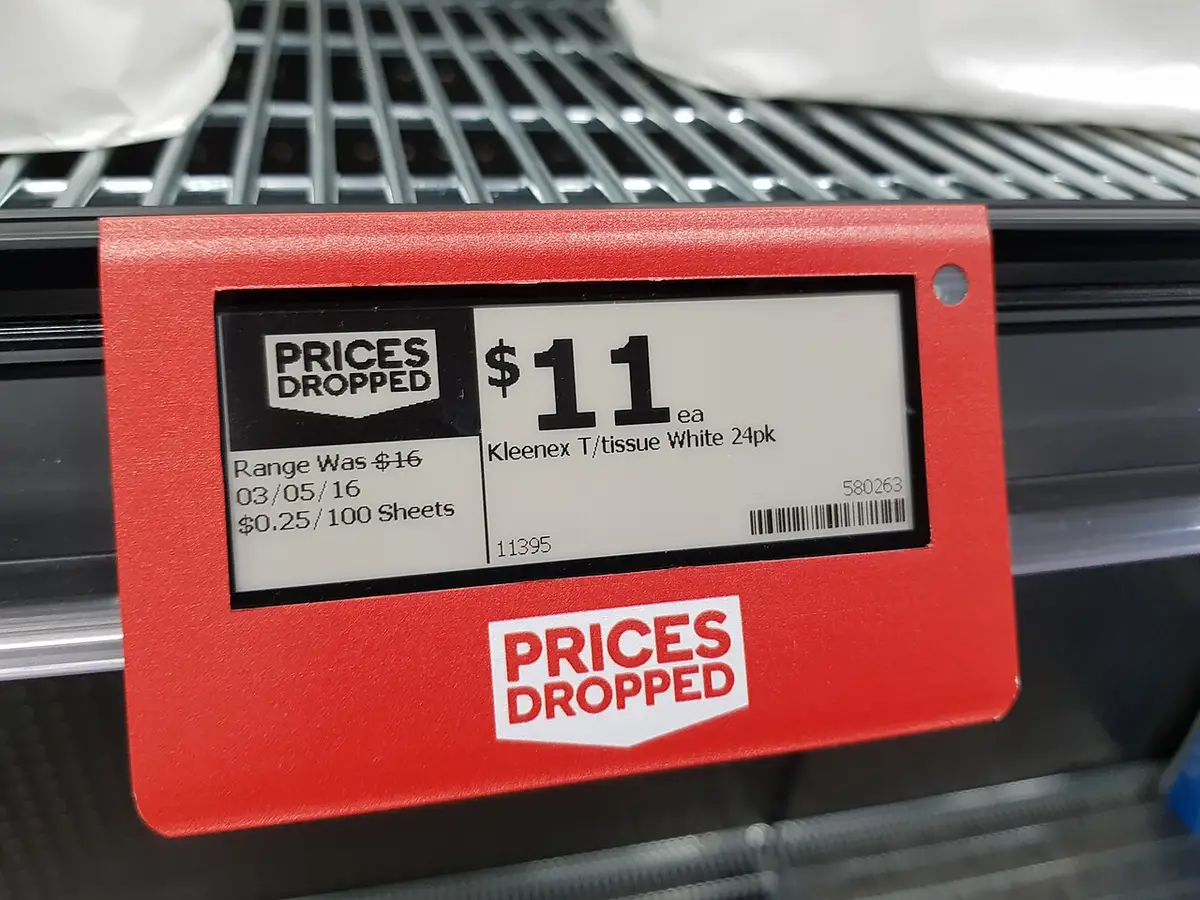
One price is a guess with a single data point. Three prices give you a comparison, and comparisons are how you learn what buyers actually value.
- Anchor: the highest price you can defend with a straight face. It tests whether buyers value the result more than you assumed.
- Middle: the price your costs and the market range both support. Most first sales happen here, and that is fine.
- Floor-plus: the lowest price that still leaves a margin worth having. It tells you how far down you can go without working for free.
Test them one at a time, not all at once. Changing the price every few days confuses the result, so give each price enough visitors to mean something.
Start with the middle price if the choice feels overwhelming. Both stay available for later experiments.
When the First Price Does Not Sell

Silence after launch rarely means the price alone is wrong. It can also mean too few people saw the offer, or the offer itself was unclear.
Check the traffic first. If a handful of people visited, the problem is reach — a different job, covered in the guide to finding your first ten customers.
If visitors arrive and nobody buys, look at the page before touching the price. Confusing headlines or missing answers can cost more sales than ten dollars ever will.
Lower the price only after the page is clear. Try a small cut for a week and you get a clean answer; a big cut made in panic gives you noise.
Raise it again when sales come easily. Buyers who purchase without hesitating are telling you the price could have been higher, and listening to them is free.
Keep notes on every change. Write down the price, the date, and the sales that followed — three lines in a notebook turn guessing into a record.
Mistakes That Make Pricing Harder Than It Is
- Pricing from feelings alone: a number that “feels right” has no costs behind it, so it cannot survive the first refund.
- Copying a big competitor: large sellers spread their costs across thousands of units, and your arithmetic is not theirs.
- Forgetting the fees: payment processors, marketplaces, and postage take their share whether you planned for it or not.
- Setting the price once and never touching it again: costs change, buyers change, and a price that never moves slowly stops fitting either.
Questions Founders Ask About Pricing
What if my costs are almost zero?
Digital products often have low costs per unit, which is good news and a trap at the same time. Price from the value of the result and the time behind it, not from the cost of copying a file.
Should I start low to get my first customers?
Opening low can help, but only when the price still leaves a margin. Free work teaches buyers that the product is worth nothing, and that lesson is hard to undo.
How often should I change the price?
Change one thing at a time and give each price enough visitors to judge it. Weekly changes with almost no traffic tell you nothing.
Do I need a discount for my first buyers?
Thank early buyers with something small, and they often become your best source of honest feedback. Make the discount modest so the real price stays believable.
What if a buyer says the price is too high?
Ask what they compared it with. Their answer shows whether they missed the value or the price genuinely sits outside what they can pay — and both answers are useful.
Tonight, Pick a Number

Pricing ends the same way validation ends: with a small action taken tonight, not a perfect answer found someday. Add up the costs, count the hours, check the range, and write the number down.
Put that number on the page and show it to the first people you talked to during validation. Their reaction — a quick yes, a pause, a question — is the next piece of data, and it arrives faster than any spreadsheet.
Slight discomfort about the number is usually a good sign. Comfortable prices rarely survive contact with real costs, while uncomfortable ones at least respect them.
Questions that survive this guide have somewhere to go. See the About page for what this site is for, and the Contact page to reach the person behind it.
Methodology
This guide prices from costs, time, and market range — nothing else. All dollar figures in the soap example are illustrative, not quotes from a real seller.
Photos in this article come from Wikimedia Commons, with attribution in each caption. No outside source sets the prices here; the method is the guide’s own.
This article is general information, not financial advice. Prices in the soap example are illustrative, and the right first price for your product depends on your costs, your time, and what your buyers will pay — test it with real sales before treating any number here as a recommendation for your situation.